
Care Guidance
Mobility & Safety
Understanding movement, risk, and how to reduce harm without creating fear
Mobility often changes gradually. What was once simple can become slower, less stable, or more unpredictable.
Safety becomes more important over time, but it needs to be balanced carefully. Too much restriction can create frustration. Too little awareness can lead to risk.
How mobility changes
Slower movement, hesitation, and unsteadiness are often subtle at first. Recognising them early reduces risk.
Falls and near misses
Near misses matter as much as falls. They often signal what is coming before a more serious incident occurs.
Risk and independence
The aim is not to prevent all movement. It is to reduce risk while allowing as much independence as possible.
1. How mobility changes
Changes in mobility are not always sudden.
You may notice slower movement, hesitation, unsteadiness, or a reduced willingness to move at all. These changes are often subtle at first.
Over time, they can increase the risk of falls or injury.
Mobility is not only about walking. It can include standing, sitting, turning, reaching, getting in and out of bed, using the toilet, climbing stairs, getting dressed, or moving safely around the home.
Small changes matter because they often show where risk is beginning.
What can help
- notice what has changed from the person’s usual movement
- watch how they stand, turn, sit and walk
- allow more time for movement
- keep important items within easy reach
- check whether movement is worse at certain times of day
- notice whether pain, tiredness, dizziness or fear is affecting movement
- keep walkways clear where possible
- write down changes that repeat
When to make a note. Make a note if movement becomes slower, more hesitant, less steady, more painful, more tiring, or if the person becomes reluctant to move in ways they managed before.
2. Balance and stability
Balance is often affected before strength.
Someone may still be physically capable, but less stable when standing, turning or walking. This is where many risks begin.
Pay attention to small signs — reaching for support, pausing before moving, touching furniture while walking, leaning to one side, shuffling, or losing confidence.
Balance can also change depending on tiredness, medication, footwear, hydration, pain, eyesight, infection, lighting, floor surfaces or how quickly someone stands up.
What can help
- encourage slow standing rather than sudden movement
- allow a pause before walking
- keep walking aids nearby if used
- check that shoes or slippers fit properly and are not loose
- remove obvious trip hazards where possible
- make sure lighting is good, especially at night
- watch for dizziness after standing
- seek advice if balance changes suddenly or repeatedly
When to make a note. Make a note if the person sways, grabs for support, stumbles, becomes dizzy, walks differently, leans, shuffles, or seems less confident when standing or turning.
3. Falls and near misses
Not all falls result in injury, and not all risks lead to a fall.
Near misses — moments where someone almost falls or needs to catch themselves — are just as important to notice. They often happen before a more serious incident.
A near miss might be a stumble, a slip, a sudden grab for furniture, a loss of balance when turning, or needing unexpected help to stay upright.
Falls and near misses should not be ignored just because the person says they are fine. They can show that something in the routine, environment, health, medication, footwear or mobility support needs attention.
What can help
- record falls and near misses
- note where they happened
- note what the person was doing at the time
- check for pain, bruising, dizziness or confusion afterwards
- avoid moving someone too quickly after a fall
- seek medical advice if there is injury, pain, head impact, confusion or uncertainty
- look for patterns, such as falls at night or during transfers
- review the environment after any fall or near miss
When to make a note. Make a note of every fall or near miss, including the date, time, location, what happened before it, whether there was injury, and whether advice was sought.
4. Moving safely
Helping someone move requires time and awareness.
Rushing increases the risk of slips, trips and loss of balance. Even small movements, like standing up, sitting down, turning, reaching or stepping into a bathroom, can become points of risk.
Take time where possible. Allow movements to happen at their own pace.
It is also important to protect yourself. Trying to lift, pull or catch someone without support can injure both of you. If moving someone no longer feels safe, that is a sign that more advice or equipment may be needed.
What can help
- prepare the space before movement begins
- move obstacles out of the way
- make sure the person has suitable footwear
- explain what is happening before helping
- allow the person to move in stages
- avoid pulling from the arms or rushing them upright
- use walking aids or equipment as advised
- ask for professional advice if transfers become difficult or unsafe
When to make a note. Make a note if standing, sitting, turning, toileting, getting in or out of bed, stairs, bathing, or transfers become difficult, unsafe or physically too much to manage.
5. The environment
The home environment plays a significant role in safety.
Loose rugs, clutter, poor lighting, trailing wires, wet floors, unstable furniture, pets, low chairs or obstacles in walkways can increase risk without being obvious.
Small adjustments can make a meaningful difference.
The aim is not to strip the home of personality. It is to make everyday movement easier, calmer and less risky.
What can help
- keep main walkways clear
- remove or secure loose rugs where possible
- improve lighting in hallways, stairs, bathrooms and bedrooms
- keep frequently used items within easy reach
- avoid trailing wires
- wipe spills quickly
- check that chairs are stable and easy to get out of
- consider night lights if the person gets up during the night
When to make a note. Make a note if the same area causes repeated difficulty, if someone trips or nearly trips in the same place, or if the home environment is making care unsafe.
6. Confidence and hesitation
Mobility is not only physical. Confidence plays a part.
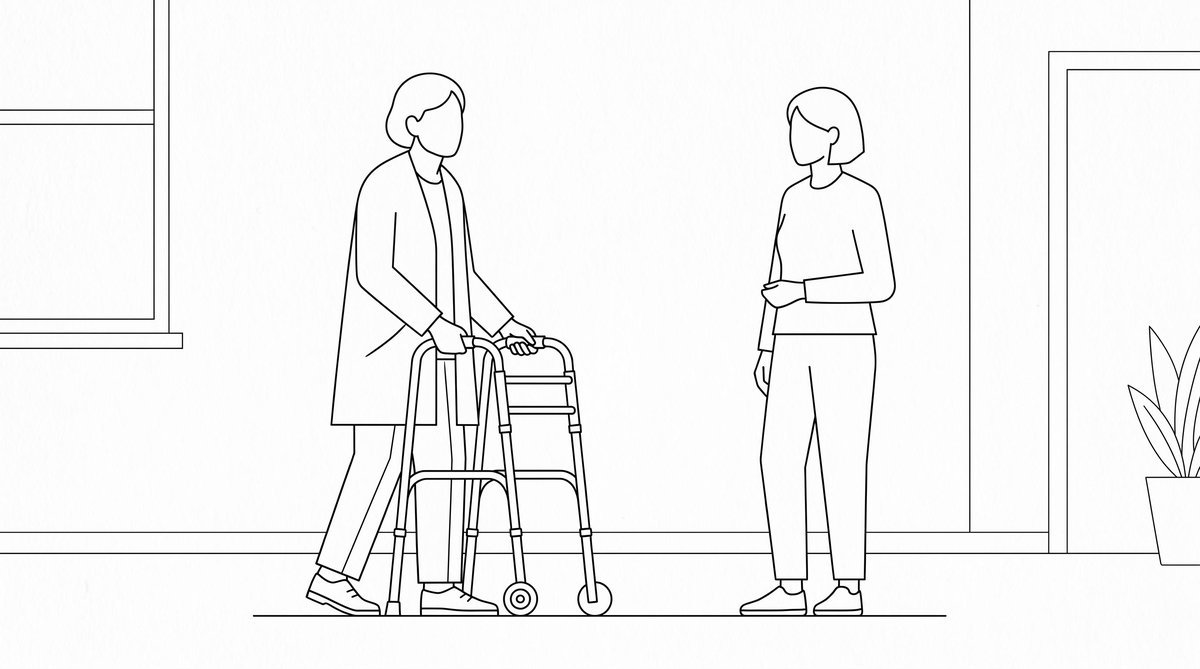
A person who feels unsure may hesitate, move differently, or avoid movement altogether. This can lead to further decline over time.
Encouragement matters, but so does recognising when something no longer feels safe for them.
Fear of falling can be powerful. It may make someone move less, rely more on furniture, refuse stairs, avoid bathing, or stay seated for longer than they need to. This can become a cycle: less movement, less strength, less confidence.
What can help
- listen if the person says they feel unsafe
- avoid pushing them beyond what feels manageable
- encourage small, safe movements where appropriate
- give time and reassurance
- keep the environment calm
- notice whether fear is linked to a particular place or activity
- use support aids if advised
- ask for advice if fear of falling starts limiting daily life
When to make a note. Make a note if the person avoids movement, seems frightened, refuses certain rooms or activities, relies more on furniture, or loses confidence after a fall or near miss.
7. When independence changes
There is often a gradual shift from independence to support.
This can be difficult to navigate. Maintaining independence where possible is important, but safety becomes the priority when risk increases.
These decisions are rarely clear-cut.
The person may still want to do things for themselves, even when the risk has changed. That wish matters. The aim is usually to support independence safely, not remove it too quickly.
What can help
- allow the person to do what they can safely manage
- offer support without taking over too soon
- break tasks into smaller steps
- give more time rather than rushing in
- use prompts or supervision where full assistance is not needed
- adapt the task instead of stopping it completely
- balance dignity, choice and safety
- seek advice if risk becomes difficult to judge
When to make a note. Make a note if the person can no longer manage a task safely, if they need more help than before, or if independence is creating repeated risk.
8. Using support
Support can include physical assistance, walking aids, grab rails, raised toilet seats, shower chairs, bed rails, commodes, stair rails, ramps, alarms or other adaptations in the home.
These are not always accepted easily. They can feel like a loss of independence.
Introducing support gradually, and without pressure, is often more effective.
It can help to frame support as something that keeps the person doing more, rather than something that proves they can do less.
What can help
- introduce one change at a time where possible
- explain the purpose clearly and calmly
- allow the person time to get used to new equipment
- make sure walking aids are the right height and used correctly
- keep aids within reach
- check equipment regularly for wear or instability
- ask an occupational therapist, physiotherapist or relevant professional for advice
- avoid using equipment in ways it was not intended for
When to make a note. Make a note if equipment is refused, misused, no longer suitable, causes distress, or if the person’s needs change and current support no longer feels enough.
9. Fatigue and movement
Fatigue affects mobility.
Someone may move well at one point in the day and struggle at another. This can create confusion if you are only observing at certain times.
Patterns become clearer when you notice how movement changes throughout the day.
Tiredness can increase the risk of falls, poor balance, reduced concentration, slower reactions and frustration. It may also affect the carer, especially where moving or supervising someone takes repeated effort.
What can help
- notice when movement is usually better or worse
- plan harder tasks for stronger parts of the day
- allow rest before and after movement
- avoid unnecessary trips around the home
- keep essentials nearby
- watch for fatigue after appointments, bathing or visitors
- simplify routines on difficult days
- seek advice if fatigue is sudden, severe or worsening
When to make a note. Make a note if movement changes significantly during the day, if fatigue leads to falls or near misses, or if the person becomes much weaker after normal activity.
10. Reducing risk without restriction
Safety is not about preventing all movement.
Restricting movement too much can lead to frustration, reduced confidence, stiffness, loss of strength and further decline.
The aim is to reduce risk while allowing as much independence as possible.
This can be a difficult balance. Too little support can be unsafe. Too much restriction can take away confidence and dignity. Small adjustments often work better than large sudden changes.
What can help
- reduce obvious hazards first
- support movement rather than stopping it completely
- encourage safe independence where possible
- use supervision when needed
- adapt tasks instead of removing them
- allow extra time
- keep the person involved in decisions where possible
- review risk regularly as needs change
When to make a note. Make a note if safety concerns are leading to conflict, distress, reduced movement, repeated falls, or difficult decisions about independence.
11. When to seek support
If mobility changes significantly, or if falls become more frequent, it may be appropriate to seek additional support.
This could involve a GP, occupational therapist, physiotherapist, district nurse, falls team, social care team, or another relevant professional.
Early input can often prevent more serious issues later.
You do not need to wait for a serious fall before asking for help. Near misses, growing fear, unsafe transfers, repeated dizziness, increased weakness or difficulty managing stairs, bathing or toileting can all be reasons to ask for advice.
What can help
- contact the GP if mobility changes suddenly or significantly
- ask about physiotherapy if strength, balance or walking is declining
- ask about occupational therapy if daily tasks or home safety are becoming difficult
- ask for a falls assessment if falls or near misses are repeating
- seek urgent medical advice after head injury, serious pain, suspected fracture, confusion or collapse
- keep a record of falls and near misses
- take notes to appointments
- ask professionals to explain what should happen next
When to make a note. Make a note of who you contacted, what advice was given, what referrals were made, and whether anything changed afterwards.
12. A balanced approach
Mobility and safety require constant adjustment.
What works one week may not work the next. Staying aware, making small changes, and responding to what is happening is more effective than trying to apply a fixed solution.
The aim is not to remove all risk. That is rarely possible. The aim is to notice where risk is increasing, reduce what can be reduced, and support the person to move as safely and confidently as possible.
You are allowed to ask for help before things reach crisis point.
What can help
- review mobility regularly
- notice changes in confidence as well as physical ability
- keep the environment as safe as practical
- adapt routines as needs change
- record falls, near misses and repeated concerns
- involve professionals when risk increases
- protect your own body when helping someone move
- remember that dignity and independence still matter
When to make a note. Make a note if mobility concerns begin affecting safety, independence, dignity, daily routine, your own physical health, or your ability to provide care safely.
13. What comes next
Mobility and safety are closely linked with:
Together, these help build a clearer understanding of how needs are changing over time.